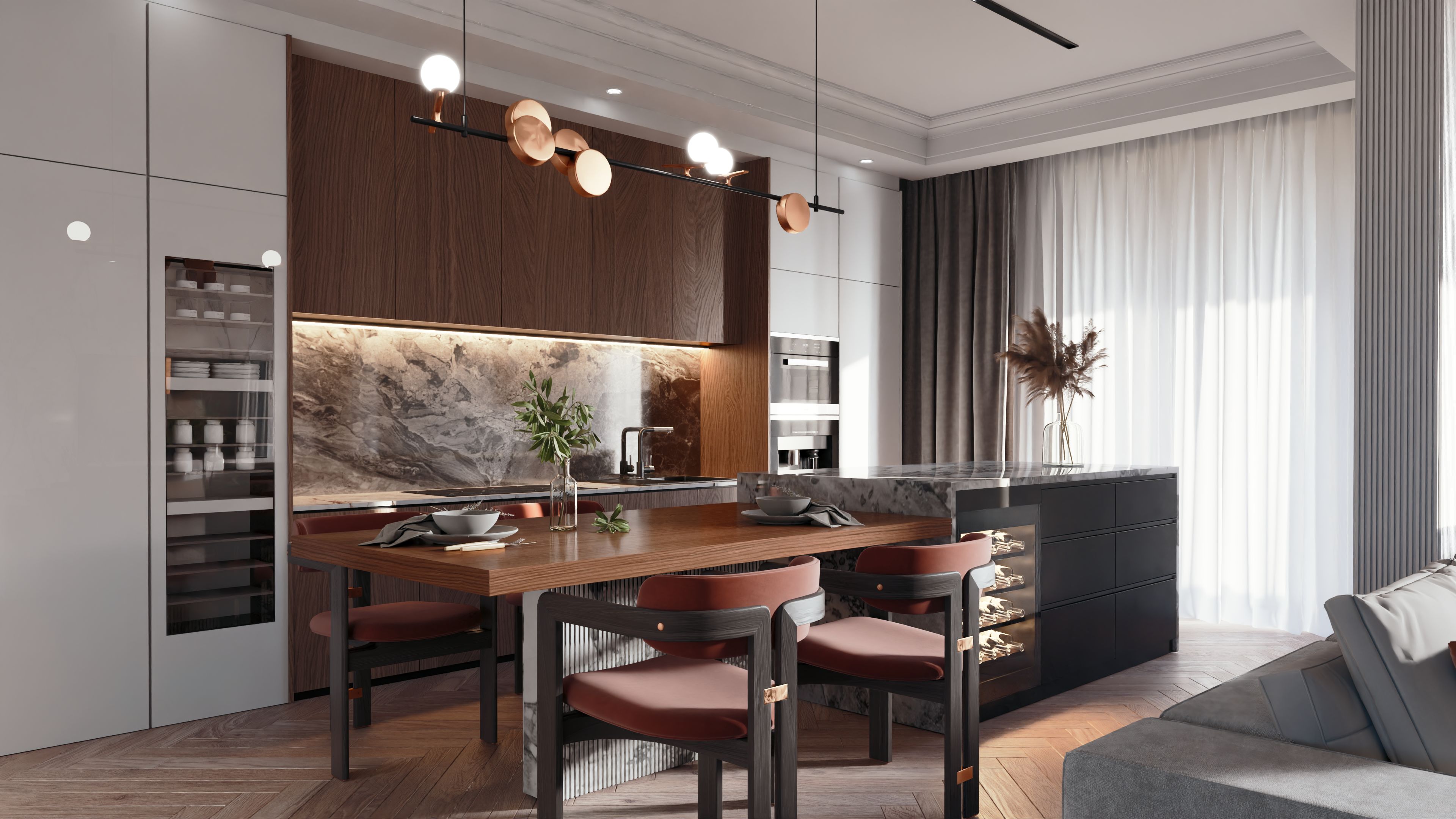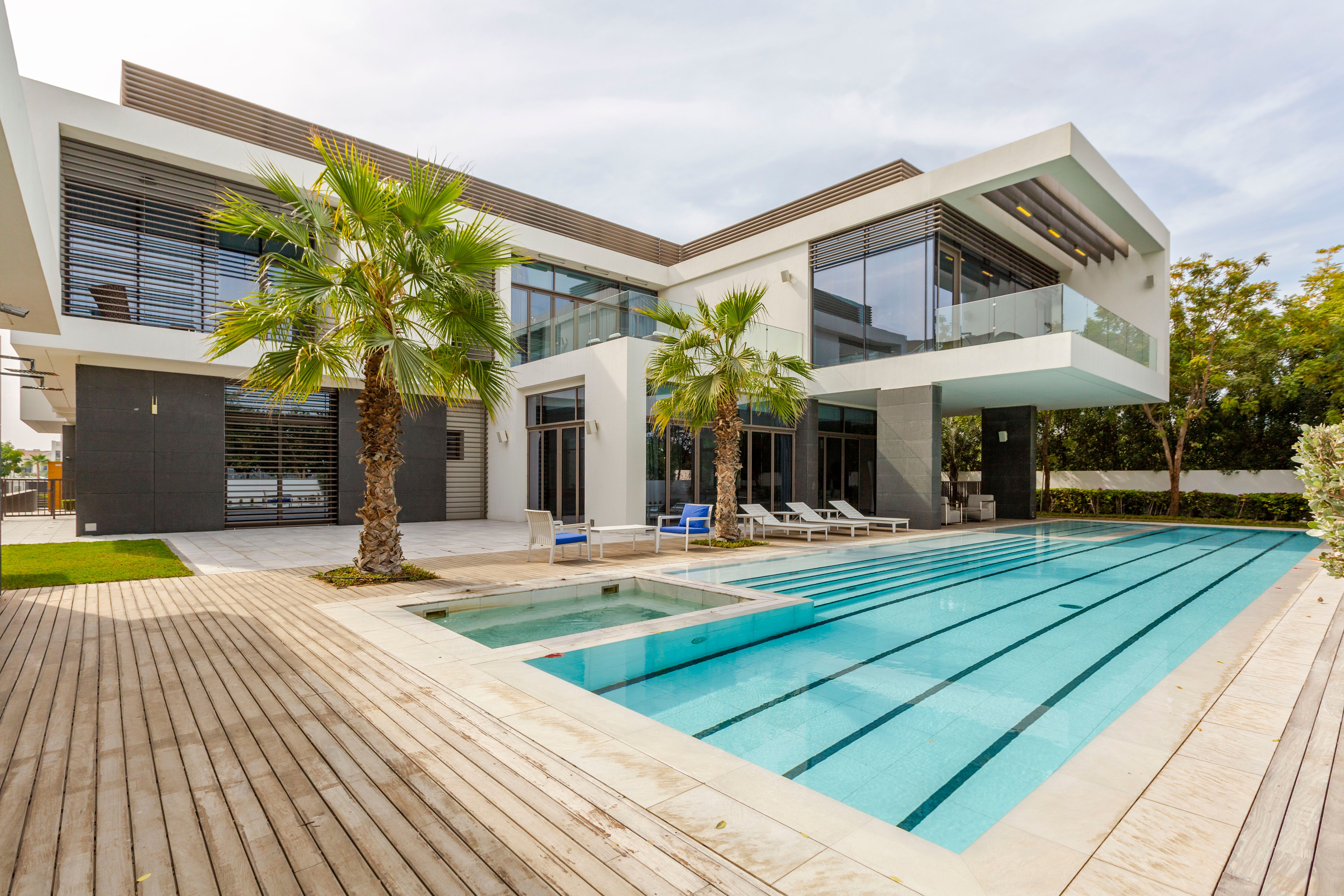
For many Dubai villa families, the question is not whether to extend — it is when and how. Children grow, families expand, lifestyle needs change, and the house that worked four years ago is beginning to feel constrained. The alternative — selling and buying something larger — comes with Dubai Land Department transfer fees, agent commissions, moving costs, and the loss of a community and location that took years to settle into.
A properly planned and approved villa extension in Dubai typically costs 40 to 60% less per sqft than the equivalent additional space bought through relocation, once all transaction costs are factored in. And a well-executed extension in a strong community delivers a 10 to 20% uplift in property value on top of the daily lifestyle benefit.
But a villa extension in Dubai involves more than construction. It involves a mandatory approval process that, for properties in Emaar or Nakheel communities, includes a developer GFA fee that is often one of the largest cost items in the project — and one that catches homeowners by surprise when they discover it at the conditional NOC stage after months of planning. Understanding the full cost picture before design begins is the essential foundation of any extension project.
This guide covers exactly that: the types of extensions available in Dubai, the approval process by developer and authority, the GFA and AGFA fees that apply to BUA increases, typical construction costs by extension type, and the complete project timeline from first assessment to handover.
Unapproved extensions also risk forced demolition at the owner's cost, and DLD flags unapproved works during title transfer.
Extension vs Renovation vs Relocating: The Decision Framework
Before planning an extension, it helps to be clear about what an extension is and is not — and how it compares to the alternatives.
| Option | What it involves | Key consideration |
|---|---|---|
| Villa extension | Adding new floor area or covered space to the existing villa, permanently increasing BUA. Always requires a developer NOC and a DM/Trakhees permit. | 40–60% cheaper per sqft than relocating; 10–20% property value uplift. The GFA fee is the key cost variable. |
| Villa renovation | Working within the existing footprint: updating finishes, reconfiguring layouts, replacing fixtures. Usually needs permits only if structural walls are affected. | Faster and lower cost than an extension, but does not add BUA. Better when the space is adequate but dated. |
| Relocating | Selling the existing villa and buying a larger one in the same or a different community. | DLD transfer fees (4%), agent fees (2%), moving costs, loss of a settled community, and full market exposure. |
The extension vs relocating calculation: A family in Arabian Ranches moving from a 4-bed to a 5-bed villa in the AED 5–7M range spends roughly AED 300,000–500,000 on DLD fees, agent costs, and moving expenses. That same budget covers a well-specified ground-floor room addition and outdoor terrace upgrade.
If your space is adequate but dated, a renovation may be the better route — see our villa renovation cost guide for typical budgets.
What Can Be Extended: Types of Dubai Villa Extension
Not every extension is the same in scope, complexity, or cost. Understanding the categories helps you assess what is right for your property and what the project actually involves.
Ground Floor Room Addition
The most common villa extension in Dubai: adding a new room, study, majlis, home office, or extended living space at ground-floor level. This is generally the most straightforward type structurally — new foundations, blockwork walls, roof slab, MEP connections, and internal finishes — with the new room connecting to the villa through an opening in the existing external wall.
- Requirements: Available plot area within setback rules, remaining developer GFA allowance, developer NOC, DM/Trakhees building permit, and a DEWA NOC for the load increase.
- Timeline: 10–16 weeks from the start of approvals to completion.
- Cost: Mid-range AED 200,000–550,000.
Second Floor or First Floor Addition
Adding a complete first floor (or extending an existing first-floor footprint) is a more complex and more expensive undertaking. The key structural question is whether the existing ground-floor walls, columns, and foundations were designed to carry the additional load. Many Dubai villas built in the 1990s and early 2000s were not designed with future vertical expansion in mind, so a licensed structural engineer must assess the existing structure before any design begins.
- Requirements: A structural assessment confirming load capacity (and strengthening works if needed), developer NOC, DM/Trakhees building permit, and a DEWA load assessment. Dubai's updated regulations allow second-floor extensions up to 100% within the permissible GFA, with a minimum 1.5-metre setback.
- Timeline: 16–28 weeks.
- Cost: AED 600,000–2,000,000+ depending on size and specification.
Covered Outdoor Structure: Pergola, Terrace, or Garden Room
Adding a covered outdoor structure — a louvre-roof aluminium pergola, a covered terrace, or a partially enclosed garden room — increases BUA and typically requires a developer NOC. Lightweight, non-fixed structures such as sail shades may not trigger a BUA calculation, so always confirm with your community management whether the specific structure you are planning counts as BUA.
- Requirements: Developer NOC (a non-standard DCUP for Nakheel communities; the Emaar Community Portal for Emaar). A DM permit may or may not be required, depending on the structure type and whether it is attached to the villa.
- Cost: AED 25,000–80,000 for a standard louvre-roof pergola. For enclosure options and specifications, see our balcony enclosure guide.
Pool Addition
A new swimming pool in the villa's private garden is classified as an external structural modification and always requires a developer NOC (non-standard DCUP for Nakheel; the Emaar portal for Emaar) and a DM or Trakhees permit. Pools also require a DEWA water connection NOC. A family pool starts from AED 50,000 for basic construction.
The GFA Fee: The Cost Most Homeowners Discover Too Late
For most Dubai villa extension projects in Emaar or Nakheel communities, the GFA fee — charged by the developer on any increase to the villa's built-up area — is by far the largest cost in the approval process. It frequently exceeds the combined cost of all other permits and consultant fees many times over. And it is the cost most often not communicated to homeowners until the conditional NOC arrives, after months of planning and drawing preparation.
The most common renovation budget overrun in Dubai is the GFA fee nobody told the homeowner about until the conditional NOC arrived.
Before any extension design begins, confirm your villa's current BUA, the community's permitted maximum BUA ratio for your plot, and your remaining GFA allowance. The GFA fee is calculated on every sqft of new BUA you add: a 30 sqm (322 sqft) extension in an Emaar community at AED 700/sqft costs AED 225,400 in GFA fees alone — before a single brick is laid.
Emaar GFA Fee Structure
| Fee type | Amount | Source |
|---|---|---|
| Emaar review fee (per submission) | AED 500 | Typical 2026 Dubai market range |
| GFA fee per sqft of new BUA (standard tier) | AED 700 per sqft | Typical 2026 Dubai market range |
| GFA fee per sqft of new BUA (some communities) | AED 1,000 per sqft | Typical 2026 Dubai market range |
| Security deposit | AED 5,000 – 10,000 (refundable) | Typical 2026 Dubai market range |
| Example: 30 sqm (322 sqft) extension at AED 700/sqft | AED 225,400 in GFA fees | Calculated example |
The GFA fee is non-refundable once paid, as is the AED 500 review fee. Performance deposits (typically 5–10%) are refunded after a successful final inspection.
Nakheel AGFA Fee Structure
Nakheel communities use the AGFA fee system — Nakheel's equivalent of Emaar's GFA fee — for any BUA addition. AGFA fees vary by community, villa type, and the amount of BUA being added, and must be calculated and budgeted before extension design begins.
| Fee type | Amount | Source |
|---|---|---|
| Nakheel DCUP review fee | AED 2,500 – 5,000 | Typical 2026 Dubai market range |
| Nakheel security deposit | AED 5,000 – 20,000 (refundable) | Typical 2026 Dubai market range |
| AGFA fee (Jumeirah Park, Al Furjan BUA additions) | Varies by community and villa type — confirm with Nakheel before designing | Typical 2026 Dubai market range |
| JVT / JVC / Al Furjan: Nakheel BUA permission fee | AED 300 – 500 per sqft | Typical 2026 Dubai market range |
| Palm Jumeirah: Nakheel BUA permission fee | AED 500 – 2,000 per sqft | Typical 2026 Dubai market range |
Confirm your remaining allowance first: Always check your remaining GFA/AGFA allowance with Nakheel or Emaar before commissioning any design work. If your villa has already been extended, you may have little or no allowance left — and discovering this after paying for architectural drawings is a preventable, expensive mistake.
The Complete Approval Process for a Dubai Villa Extension
Every villa extension that increases Built-Up Area or involves structural changes requires formal approval before any construction begins. The sequence differs depending on whether your villa is in an Emaar community, a Nakheel community, or an unaffiliated mainland plot.
For Emaar Communities (Arabian Ranches, Dubai Hills Estate, The Springs, The Meadows, Emirates Hills)
- Log in to the Emaar Community Management online portal (community.emaar.com) using owner credentials linked to your title deed. From 2026, all Emaar Home Modification submissions must go through the online portal — walk-in submissions are no longer accepted.
- Select Home Modifications → New Request and choose the modification type. Upload the title deed, owner's Emirates ID, contractor's valid DED trade licence and insurance certificate, scope of works, architectural drawings (existing and proposed), structural drawings if structural works are involved, and a GFA calculation showing the new BUA. Pay the AED 500 review fee.
- Emaar Community Management (ECM) initial review takes 3–5 working days. For structural and external works, the Design Review Committee (DRC) conducts a further review of 5–10 working days.
- A Conditional Approval is issued, at which point Emaar calculates the GFA fee on the new BUA. Pay the GFA fee (AED 700–1,000 per sqft of new BUA) and the refundable security deposit (AED 5,000–10,000) to receive the final NOC.
- With the Emaar NOC in hand, apply to Dubai Municipality for the building permit. DM permit fee: AED 1.00/sqft of BUA, minimum AED 200. DM technical review: 3–7 working days for residential.
- Start construction only once both the Emaar NOC and the DM building permit are received. Use Emaar-registered contractors only, and build exactly as per the approved drawings.
- On completion, request the Emaar final inspection and submit for the DM Completion Certificate. The security deposit is refunded after a successful inspection.
For community-specific rules, see our guides to villa renovation in Arabian Ranches and villa renovation in Dubai Hills Estate.
For Nakheel Communities (Jumeirah Park, Al Furjan, Palm Jumeirah, JVC Villas, JVT)
- Obtain a Villa Status Report (VSR) from Nakheel confirming there are no existing unauthorised works. A VSR violation blocks the DCUP submission.
- Commission a Trakhees-registered engineering consultant to prepare drawings in Trakhees CED format. For BUA increases, commission a demarcation survey (AED 2,000–5,000) to confirm exact plot boundaries.
- Submit the DCUP application via the Nakheel Online Services portal with the full document pack. Standard submissions (no BUA change) take 7–15 working days; non-standard submissions (BUA increase, extensions) take 30 working days and are reviewed by the Development Review Board, which meets monthly.
- Pay the AGFA fees to convert the Provisional NOC to a Final NOC, and obtain utility NOCs (DEWA, Lootah Gas, du) if MEP works are involved.
- Submit the Trakhees CED building permit application with the Nakheel Final NOC as a supporting document. Trakhees permit: AED 5,000–12,000.
- Start construction under the Trakhees building permit, building exactly as per the approved drawings.
- On completion, obtain the Nakheel Compliance Certificate (NCC) and the Trakhees Building Completion Certificate (BCC). The BCC is required before extended areas can be legally used or sold.
For Nakheel community detail, see our guides to villa renovation in Jumeirah Park and villa renovation in Al Furjan.
For Mainland Properties (No Developer Community)
- Engage a DM-registered structural engineer to assess the existing structure and prepare extension drawings in DM DBC 2026 format.
- Submit the DM building permit application with architectural and structural drawings, a site plan, and property documents. Fee: AED 1.00/sqft of BUA, minimum AED 200.
- Obtain a DEWA NOC for the increased electrical load and water connection. DEWA NOC: AED 2,500–4,500.
- DM technical review takes 3–7 working days for residential. Start construction on receipt of the DM permit.
- Request the DM Completion Certificate on project completion.
Critical parallel submission rule: The developer NOC application and the structural design work should run concurrently, not sequentially. The approval phase adds 6–10 weeks to the project timeline, and both starting design before the approval programme begins and waiting for approval before starting design add avoidable weeks. The optimal approach: commission design and submit the developer NOC application on the same day.
For a complete guide to the NOC process across all Dubai villa communities, see our renovation NOC Dubai step-by-step guide.
Villa Extension Cost in Dubai: Complete 2026 Cost Breakdown
The total cost of a Dubai villa extension has two distinct components: the construction cost and the approval and professional fees. Both must be budgeted from the start — and the GFA/AGFA fee, in particular, must be confirmed before any design commitment is made.
Construction Cost Per Sqft by Finish Level
| Finish level | Cost per sqft (structure, MEP, finishes) | Source |
|---|---|---|
| Standard (mid-market materials, functional MEP) | AED 800 – 1,000 | Typical 2026 Dubai market range |
| Premium (upgraded flooring, quality fixtures, enhanced MEP) | AED 1,000 – 1,300 | Typical 2026 Dubai market range |
| Luxury (high-end materials, bespoke joinery, full smart integration) | AED 1,300 – 1,500+ | Typical 2026 Dubai market range |
Example Total Costs by Extension Type
| Extension type | Construction (mid-range) | Additional approval costs* | Source |
|---|---|---|---|
| Single room addition (50 sqm / 538 sqft) | AED 200,000 – 400,000 | AED 15,000 – 60,000 + GFA fee** | Typical 2026 Dubai market range |
| Open-plan conversion + rear extension (80 sqm / 860 sqft) | AED 250,000 – 550,000 | AED 15,000 – 60,000 + GFA fee** | Typical 2026 Dubai market range |
| Full second-floor addition (150–250 sqm) | AED 600,000 – 2,000,000+ | AED 25,000 – 60,000 + GFA fee** | Typical 2026 Dubai market range |
* Approval costs include: structural consultant (AED 7,000–20,000), DM building permit (AED 1.00/sqft, minimum AED 200), Trakhees permit (AED 5,000–12,000 where applicable), DEWA NOC (AED 2,500–4,500), developer NOC admin fees (AED 500–5,000), and a refundable security deposit (AED 5,000–20,000). Total approval costs excluding the GFA fee: AED 15,000–60,000.
** The GFA/AGFA fee is additional: AED 700–1,000 per sqft of new BUA in Emaar communities; AED 300–500/sqft (JVT/JVC/Al Furjan) to AED 500–2,000/sqft (Palm Jumeirah) in Nakheel communities.
Worked Example: 30 sqm Room Addition in an Emaar Community
| Cost item | Amount (AED) |
|---|---|
| Construction (30 sqm = 322 sqft at AED 900/sqft standard finish) | 289,800 |
| Emaar GFA fee (322 sqft × AED 700/sqft) | 225,400 |
| Structural consultant + architectural drawings | 12,000 – 15,000 |
| DM building permit fee (322 sqft × AED 1.00/sqft) | 322 |
| DEWA NOC for load increase | 2,500 – 4,500 |
| Emaar review fee | 500 |
| Security deposit (refundable) | 5,000 – 10,000 |
| Total (excluding refundable deposit) | ~530,500 – 535,500 |
Key insight from this example: The Emaar GFA fee (AED 225,400) comes close to the construction cost itself (AED 289,800) and is more than ten times all other approval and professional fees combined (AED 15,322–20,322). This is why the GFA fee is the biggest cost surprise in Emaar extension projects. Budget for it before you design.
Can You Extend Your Specific Villa? The Key Questions
Not every Dubai villa can be extended, and no homeowner wants to discover the limitations after commissioning design work. These are the key questions to answer before committing to an extension project.
- How much GFA allowance remains? What is your villa's current built-up area, and how much GFA allowance is left? This is the foundational question. Your community management or the developer's portal can confirm your plot's permitted GFA ratio and current BUA. If the villa has already been extended once, the remaining allowance may be small or zero.
- Do the plot setbacks allow it? Ground-floor extensions must respect the front, rear, and side setbacks specific to your community and villa type. Confirm these with your engineer or architect before designing.
- Can the structure carry a second floor? For vertical extensions, a structural engineer must assess the existing foundations, columns, and walls before any design begins. Not all Dubai villas from the 2000s–2010s were designed for future vertical expansion, and structural strengthening, if needed, adds cost and time.
- Does it meet the community's architectural guidelines? Emaar, Nakheel, DAMAC, and Meraas all have community design codes governing the external appearance, materials, roof profile, and architectural style of any extension. An extension that does not match the community's approved design language will be rejected at the NOC review stage.
Villa Extension with Malmö Interiors
Malmö Interiors manages villa extension projects across Dubai's major residential communities — from ground-floor room additions in Arabian Ranches and Dubai Hills Estate to rear terrace extensions in Al Furjan and Jumeirah Park. Our team manages the complete process from GFA confirmation and structural assessment through to authority approvals, construction, and handover.
What we deliver on every villa extension project:
- GFA confirmation before design commitment: We confirm your villa's remaining GFA/AGFA allowance and calculate the developer fee before any drawing cost is committed. No surprises at the conditional NOC stage.
- Structural assessment first: For any extension involving structural elements — particularly second-floor additions — we commission the structural engineer's assessment at the start, so limitations or strengthening requirements are identified before design investment is made.
- Complete approval management: We manage the full developer NOC application (Emaar portal or Nakheel DCUP), the DM or Trakhees building permit, the DEWA NOC, and any utility connections. You do not manage the approval process.
- Parallel submission from day one: Design work and approval submissions run concurrently. We do not wait for approval to start design, and we do not start design without running the approval process alongside it.
- Transparent, fully itemised quotation: Construction costs and all approval fees (including GFA/AGFA fees) are itemised separately with the calculation shown, so every element is listed before you commit.
- Six-month post-handover snagging support: All completed extension works carry six months of post-handover snagging support as standard.
See completed extension and construction projects in our portfolio, or explore our villa renovation and construction services.
Frequently Asked Questions — Villa Extension Dubai
How much does a villa extension cost in Dubai in 2026?
Villa extension costs in Dubai start from AED 120,000 for a basic 50sqm room addition. A single-room ground-floor addition at mid-range specification costs AED 200,000-550,000, and a full second-floor addition costs AED 600,000-2,000,000+ depending on size and specification. Construction costs per sqft run AED 800-1,000 (standard), AED 1,000-1,300 (premium), and AED 1,300-1,500+ (luxury), including structure, MEP, and finishes. These construction costs exclude the developer GFA/AGFA fee, which must be calculated separately and can be one of the largest costs in the project. For Emaar communities, the GFA fee is AED 700-1,000 per sqft of new BUA added.
Do I need approval to extend my Dubai villa?
Yes, without exception. Any extension that increases the villa's Built-Up Area or involves structural changes requires (1) a developer NOC from Emaar, Nakheel, DAMAC, or the relevant community developer, and (2) a Dubai Municipality building permit (or a Trakhees CED permit for Nakheel communities). Skipping these approvals can result in fines of AED 10,000 or more, forced stop-work orders, demolition of the completed extension at your cost, and DLD flagging of the unapproved modification during any future property transfer.
What is the Emaar GFA fee and how much is it?
The GFA (Gross Floor Area) fee is a charge levied by Emaar on any increase to your villa's Built-Up Area in an Emaar community. It applies to all room additions, second-floor extensions, and any structural addition that permanently increases BUA. In Emaar communities it is AED 700-1,000 per sqft of new BUA added. For a 30sqm (322 sqft) room addition at AED 700/sqft, the GFA fee alone is AED 225,400 — close to the construction cost itself and more than ten times all other permit and consultant fees combined. The GFA fee is non-refundable and must be confirmed and budgeted before any design work begins.
How long does a villa extension take in Dubai?
A single ground-floor room addition takes 10-16 weeks from the start of the approval process to construction completion, and a full second-floor addition takes 16-28 weeks. The approval phase (developer NOC plus DM or Trakhees building permit) adds 6-10 weeks and should run concurrently with detailed design, not after drawings are finalised. Emaar NOC: 7-14 working days. Nakheel DCUP: 7-15 working days for standard submissions, 30 working days for non-standard (BUA increase). DM building permit: 3-7 working days for residential.
Can I add a second floor to my Dubai villa?
In most cases yes, subject to: (1) your plot's remaining GFA allowance; (2) a structural engineer confirming the existing foundations, columns, and walls can carry the additional load, which is not guaranteed for villas built before 2010; (3) community design guidelines allowing a second-floor addition for your villa type; and (4) approval from the developer and Dubai Municipality or Trakhees. Dubai's regulations allow second-floor extensions up to 100% within the permissible GFA, with a minimum 1.5-metre setback. Cost: AED 600,000-2,000,000+ for a full second floor depending on size and specification.
Is extending my villa cheaper than moving to a larger one?
A properly planned villa extension is typically 40-60% cheaper per sqft than the equivalent additional space bought through relocation, once DLD transfer fees (4%), agent commissions (2%), moving costs, and market exposure are factored in. A well-executed extension in a strong Dubai community also delivers a 10-20% uplift in property value. However, the GFA/AGFA developer fee must be included in this comparison — particularly in Emaar communities, where the fee at AED 700-1,000/sqft can be substantial. For very large extensions in communities with high GFA fees, the economics may shift, so always calculate the complete cost including all fees before comparing extension against relocation.
Planning a Villa Extension in Dubai?
A villa extension is one of the most significant financial decisions a Dubai villa owner can make. Done correctly, it delivers meaningful additional space at a fraction of the cost of relocating and adds real value to your property. Done without the right planning, it runs into GFA fee surprises, approval delays, and structural complications that are entirely preventable.
Malmö Interiors manages the complete villa extension process — from GFA confirmation and structural assessment through to developer NOC, building permit, construction, and handover. We start with a free on-site consultation where we confirm your remaining GFA allowance, assess structural feasibility, and provide a fully transparent cost estimate covering construction and all approval fees before you commit to anything.
Book Your Free Villa Extension Consultation
No obligation. No fee. Honest advice on your extension options, GFA allowance, approvals, and realistic costs.Email: info@malmo-interiors.com
Office: Building 4, Green Community West, near British Orchard Nursery, DIP, Dubai
Contact us to book your free consultation, or browse our completed villa projects across Dubai.