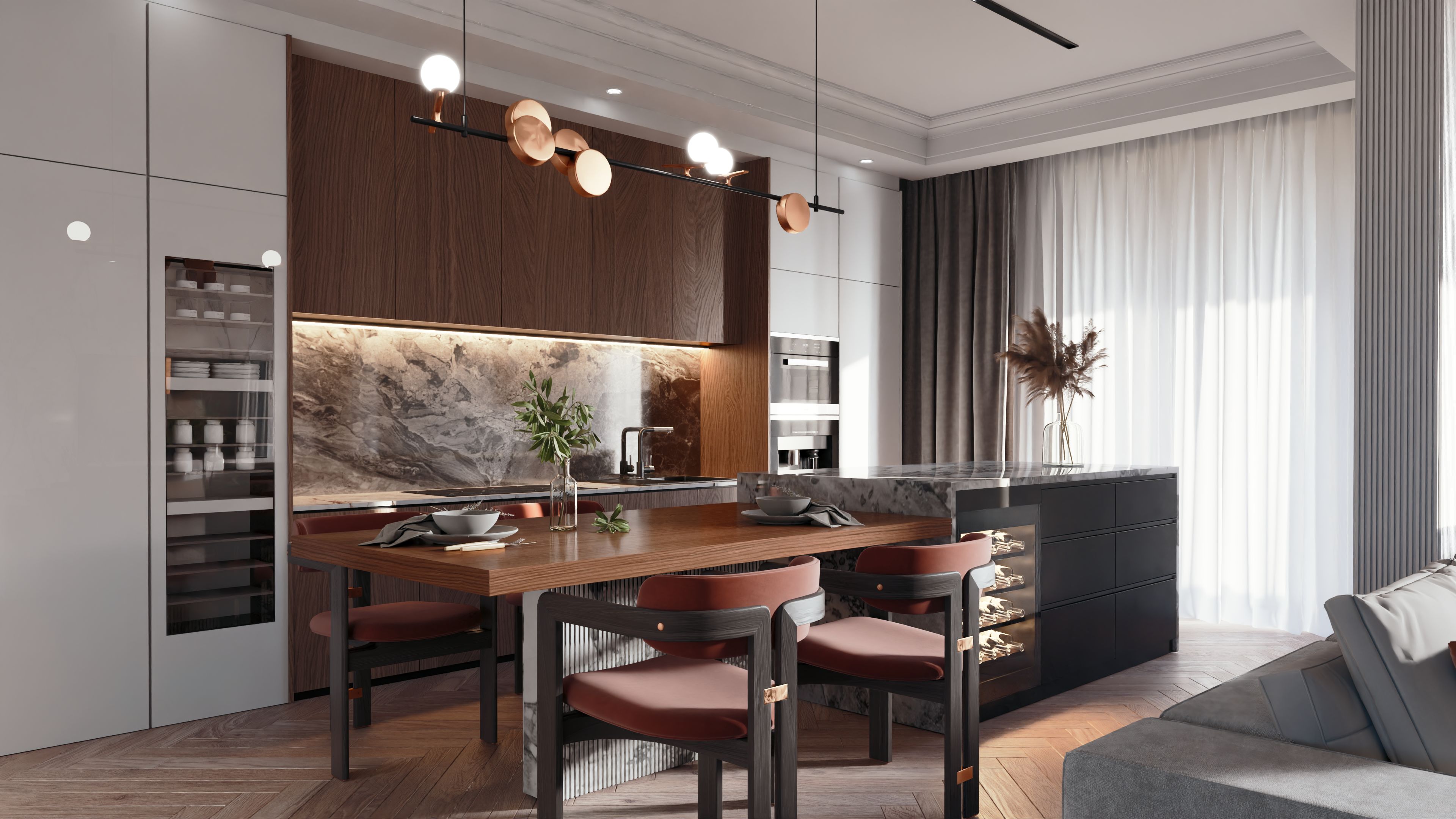
Dubai Marina is one of the most recognisable waterfront addresses in the world — 200-plus residential towers arranged around a 3.5 kilometre man-made canal, home to some of the most liquid, most rented, and most internationally recognised apartment stock in Dubai. It is also home to some of the most dated. The majority of Marina’s residential towers were built between 2005 and 2012. Most of the original finishes are now 15 or more years old, and the gap between what those 2008 specifications look like and what tenants and buyers in 2026 expect has become commercially significant.
Average apartment prices in Dubai Marina have climbed 37% over two years, reaching between AED 2,061 and AED 2,661 per square foot depending on the source and the building. Rental growth ran at 16.4% year-on-year through 2025, according to the RERA Q4 2025 Rental Market Report. In a market moving this fast, a dated apartment that has not been renovated since handover is not just aesthetically behind — it is leaving measurable money on the table in both rental income and resale value.
But renovating in Dubai Marina is not the same as renovating an apartment in JVC or Al Furjan. The high-rise environment, the building management requirements, the approval process, and the logistics of working in an occupied 40-storey tower create a layer of complexity that does not exist in villa renovation or in lower-density communities. Contractors who have not worked in Marina before consistently underestimate this complexity — and their clients pay for it in delays, stop-work orders, and neighbour complaints.
This guide covers everything a Dubai Marina apartment owner needs to know in 2026: the market context that makes renovation financially compelling, the approval process specific to Marina, the logistics that make high-rise renovation different, the costs to budget for, and the design decisions that matter most in this specific environment.
Why the Case for Renovation in Dubai Marina Is Strong in 2026
Dubai Marina’s property market has the characteristics that make renovation investment most reliable: genuine supply constraint, consistent tenant demand from a diverse international market, high liquidity on the resale side, and price growth that has been sustained across multiple years.
The Supply Constraint Argument
The Marina is almost entirely built out. Unlike emerging communities where new supply is delivering competing inventory every quarter, the Marina’s core stock is fixed. The off-plan supply surge affecting apartments in Business Bay, JVC, and parts of Dubai South does not directly affect Marina pricing in the same way. New supply entering the district is limited and targeted — Marina Gate being the most significant addition in recent years. In this environment, the condition of your specific unit within the building is the primary competitive variable. A renovated apartment in a well-located Marina tower competes against dated units in the same building and adjacent towers on a market where the tenant has strong preferences and growing ability to express them.
The Rental Return
One-bedroom apartments in Dubai Marina command AED 90,000 to AED 220,000 per year in annual rent. Two-bedrooms achieve AED 140,000 to AED 350,000. Gross rental yields for long-let apartments sit between 5.5% and 7.2%, with smaller units typically at the higher end of that range. A mid-range renovation of a 2-bedroom Marina apartment costing AED 80,000–100,000 typically increases achievable annual rent by AED 15,000–30,000 per year. At that rate the renovation pays for itself in 3–5 years through rental income alone, before any impact on the sale price. The same renovation typically increases the achievable sale price by AED 150,000–300,000 depending on the building and the quality of the finish.
The Age of the Stock
Most of Marina’s residential towers were built between 2005 and 2012. At that age, original kitchen cabinetry has seen 15 years of daily use, bathroom silicone and grouting is often failing, the painted walls carry years of marks and scuffs, and the flooring — typically ceramic tile or laminate in developer-standard specification — looks dated against the materials tenants and buyers are comparing it to. A cosmetic renovation alone — new flooring, fresh paint, bathroom refresh — lifts a tired Marina apartment to a standard that photographs and shows well without the cost of a full structural remodel.
Marina renovation premium: apartments in Dubai Marina typically cost 20–30% more to renovate than equivalent scope in JVC or Discovery Gardens, due to access logistics, building management requirements, community rules, and the higher finish standard that the market in this location expects.
What Makes Renovating in Dubai Marina Different from Other Dubai Areas
Dubai Marina is a high-rise environment, and high-rise renovation is a fundamentally different exercise from villa or townhouse renovation in a low-density community. The complexity is not primarily technical — it is logistical, regulatory, and interpersonal. Here are the specific factors that every Marina apartment owner and their contractor must understand before work begins.
Every Tower Has Its Own Management Company
Dubai Marina is not governed by a single community manager. Each of the 200-plus towers has its own owners’ association, building management company, and specific renovation rules. The NOC forms, insurance requirements, refundable security deposits, service lift booking processes, working hours, and corridor protection standards all vary by building. A contractor who has worked in one Marina tower cannot assume the same rules apply in the next one. The starting point of every Marina renovation is a conversation with your building management office to understand the specific requirements for your tower.
Contractor Insurance Verification Is Mandatory
Dubai Marina buildings mandate contractor insurance verification before any contractor enters the site. This is not a courtesy requirement — it is a condition of access. A contractor without current public liability insurance, or who cannot produce the documentation in the format the building management requires, will not be allowed on site. This requirement eliminates a significant proportion of general renovation contractors who work in lower-density communities but have not formalised their documentation for high-rise tower entry.
Goods Lift Booking and Corridor Protection
All materials, tools, waste, and joinery in a high-rise renovation move through the building’s goods lift, not the passenger lifts. Goods lifts must be booked in advance with building management for every delivery and removal. Corridor floors and walls must be protected to the building’s specified standard for the duration of the works. Failing to book the lift or protect corridors can result in the building management suspending site access entirely.
Working Hours and Noise Curfews
Marina towers typically allow renovation work between 9am and 6pm, Monday to Saturday. No noisy works — drilling, chasing, demolition — are permitted on weekends. Some towers are stricter, allowing noisy works only on weekdays during certain hours. These restrictions directly affect the programme. A renovation that would take six weeks in a villa environment may take eight weeks in a Marina tower simply because the noise window is narrower and the logistics of accessing the building with materials adds time daily.
Structural Grids and Layout Limitations
Marina high-rise towers have defined structural grids that limit how far a layout can be changed. Non-structural walls can generally be moved, but the structural columns and slabs that define the grid cannot. This means some open-plan conversions that would be straightforward in a villa require more careful structural assessment in a Marina tower, and some conversions simply are not possible without affecting the building’s structural integrity.
Acoustic Specification Between Floors
In a tower block, the noise your renovation creates is experienced not just by neighbours on the same floor but by the apartment below. The acoustic specification of new flooring — specifically the acoustic underlay or screed build-up — affects how sound transmits through the slab to the unit beneath. Some Marina buildings specify minimum acoustic ratings for new floor finishes. A contractor who specifies flooring without checking these requirements can create a situation where the building management requires it to be lifted and relaid with the correct acoustic build-up.
Hidden Conditions in Older Marina Stock
Marina towers built between 2005 and 2012 may have plumbing, drainage, electrical capacity, cooling systems, and waterproofing that do not match available drawings and may have been previously modified without proper documentation. These hidden conditions are almost always only discovered after demolition begins. Waterproofing failures in bathrooms and wet areas are the most common. Old plumbing that does not match the building drawings is the second most common. Budget 10–15% contingency for any Marina apartment renovation, particularly in towers from the earlier period of construction.
The Approval Process for Renovation in Dubai Marina
Dubai Marina sits within Dubai Municipality’s jurisdiction, not Trakhees. This determines the authority approval process. In addition to DM authority requirements, Marina apartments involve a building management NOC layer and, in Emaar-managed towers, an Emaar community NOC that must be obtained before any DM BPS submission.
Step 1: Confirm Your Building’s Specific Requirements
Before preparing any drawings or submitting any documentation, request the renovation guidelines from your building management office. These will specify the NOC forms required, the contractor insurance documentation format, the refundable security deposit amount, the goods lift booking process, the approved working hours, and the corridor protection standard. Every Marina tower is different. Do not assume the rules from another building apply.
Step 2: Obtain the Building Management NOC
A building management NOC is required for all renovation works in a Marina apartment — including cosmetic works. Even painting, cabinet replacement, and floor tile overlay without structural changes require a building management NOC in most Marina towers. The NOC must be scope-specific — it should describe what is being done, not just state that works are permitted.
Step 3: Emaar NOC (Where Applicable)
Many Dubai Marina towers, particularly those in the original Emaar-developed Marina district, require a separate Emaar NOC before the DM BPS submission can be accepted. Emaar commercial tower building management from 2026 specifically checks that any additional AC or electrical load from the renovation does not exceed the unit’s allocated DEWA load — a check that was previously informal but is now a formal documented sign-off.
Step 4: DM Fit-Out or Renovation Permit (Where Required)
Cosmetic renovation works — painting, flooring without structural changes, bathroom fixture replacement without moving plumbing, kitchen cabinetry without modifying plumbing stacks — may not require a DM authority permit. Building management NOC is sufficient for these scopes. Structural changes — moving or modifying walls, altering bathroom drain positions, opening new door openings, structural slab penetrations, or MEP changes — require a Dubai Municipality fit-out permit through the BPS portal in addition to the building management NOC.
DM BPS submissions must include drawings in DBC 2026 AutoCAD layer format, carry the stamp of a DM-registered consultant, and be submitted by a DM-registered contractor. Under Law No. 7 of 2025, only contractors registered with Dubai Municipality can submit permit applications.
The consequences of skipping the approval process in Dubai Marina: stop-work orders, fines of AED 5,000 to AED 50,000+, forced demolition of completed work, and blocks on the property title that affect future sales and mortgages. Dubai Marina buildings frequently mandate contractor insurance verification before entry, and tighter inspection schedules than many other residential communities in Dubai.
Planning a Dubai Marina Apartment Renovation?
Free site visit — your building’s NOC requirements confirmed and a fully itemised quotation.Renovation Costs in Dubai Marina: What to Budget in 2026
Marina apartment renovation costs 20–30% more than equivalent scope in JVC or Discovery Gardens, reflecting the access logistics, building management requirements, working hour constraints, and the higher finish standard the market expects.
Per Square Foot Tiers
| Renovation Specification | Dubai Apartment (AED/sqft) | Source |
|---|---|---|
| Basic / cosmetic (paint, flooring, minor fixtures, no layout change) | AED 150–300 | Typical 2026 Dubai market range |
| Mid-range (flooring, full paint, kitchen + bathroom upgrade, light electrical) | AED 300–600 | Typical 2026 Dubai market range |
| Premium (custom joinery, stone countertops, quality tile, smart home, some layout change) | AED 600–1,000 | Typical 2026 Dubai market range |
| Luxury (imported materials, full layout redesign, premium appliances, full smart home) | AED 1,000–1,500+ | Typical 2026 Dubai market range |
| Marina/Downtown/Palm premium above JVC/Discovery Gardens | 20–30% additional | Typical 2026 Dubai market range |
Typical Project Budgets by Apartment Size
A 1-bedroom Marina apartment: basic refresh (paint, flooring, minor works) AED 25,000–60,000 for the studio tier, AED 50,000–100,000 for the 1-bed tier at standard finish, AED 100,000–200,000 at mid-range finish. A more specific Marina estimate: AED 50,000–120,000 for a 1-bed full renovation covering kitchen, bathroom, flooring, and painting.
For investors using mid-range finish (the tier that matches the AED 70,000–120,000 annual rent bracket that dominates Marina long-let demand): a 2-bedroom Marina apartment renovation at AED 80,000–100,000 typically increases achievable rent by AED 15,000–30,000 per year, with the renovation investment recovered in 3–5 years through rental income, plus an increase in achievable sale price of AED 150,000–300,000.
Budget 10–15% contingency on older Marina apartments. Towers built 2005–2012 frequently reveal hidden conditions after demolition: failed bathroom waterproofing, plumbing that does not match drawings, electrical panels at capacity, or previous modifications done without proper documentation. The contingency is not optional — it is the buffer that allows the project to address what is found without stopping or compromising.
Design Decisions That Matter Most in a Marina Apartment
Dubai Marina apartments have a specific design opportunity that most other Dubai communities do not: the view. Whether it is a direct marina water view, a sea view, or a high-floor city outlook, the view is the defining feature of the address. Yet many Marina apartments — particularly those with layouts designed in 2006 or 2008 — do not take full advantage of it. The kitchen is closed off from the living area, blocking the view from the entry. The living room furniture arrangement faces a wall rather than the glazing. The master bedroom does not capitalise on the window position.
A renovation that reconfigures the layout to open the kitchen toward the living space, positions the dining area to face the water, and allows the glazing to be the dominant feature of the primary living zone transforms what the apartment feels like — and what it photographs like for rental listings — more than any individual material choice. This is the conversation worth having first, before flooring and colour palettes are discussed.
Material Choices for the Coastal Environment
Marina apartments are in a coastal environment. Salt air, high humidity during summer, and the combination of AC-dry interior air with humid outdoor air put specific demands on materials. These are the choices that matter most in this environment:
- Flooring: Porcelain or ceramic tile for floor and wall surfaces. Practical, easy to clean, and does not degrade in a coastal humidity environment. Large-format porcelain (60x60cm or 90x90cm) reads as premium on listing photographs and is genuinely durable in a rental context where turnover is regular.
- Kitchen countertop: Quartz is the most practical kitchen countertop choice for Dubai Marina apartments: non-porous, heat resistant, stain resistant, and requires no sealing. The combination of cooking humidity and coastal air makes natural stone — which requires sealing and is porous — a higher-maintenance specification in this environment. Quartz holds up through multiple tenancies without maintenance requirements.
- Cabinetry: Moisture-resistant MDF (green or blue core) for all bathroom and kitchen cabinetry. In a coastal environment, standard MDF will absorb humidity and deform at joints within a few years. This is the single most common cause of premature kitchen cabinet failure in older Marina apartments.
- Door finish: Matt lacquer or quality laminate for door fronts. High-gloss finishes show salt residue, fingerprints, and minor marks more visibly in a coastal environment and in a rental context where cleaning frequency is variable.
- Grout specification: Good-quality grout with a dark neutral tone in bathrooms and kitchens. Light grout between tiles in a rental apartment shows discolouration quickly and is difficult to restore to a clean appearance. Dark grout holds its appearance through years of use and multiple tenants.
Renovation Strategy for Different Ownership Profiles
- Rental property: Long-term investor (rental income): prioritise mid-range finish with durable, low-maintenance materials (porcelain flooring, quartz countertop, quality laminate or lacquer cabinets, good-quality bathroom tiles). Match the finish level to your target rent bracket. Over-specifying for a property in a mid-range Marina building produces diminishing returns — the market ceiling limits what additional investment achieves above a certain finish level.
- Short-term rental: Short-term rental / holiday home: specify photography-first. The profile photograph determines booking rate more than any individual material choice. Good-quality joinery, hotel-standard bathroom finish, and a clear view from the living area are the three elements that make a Marina apartment competitive on Airbnb. A DTCM Holiday Home Permit is required for short-term rental. Note: short-term rental in Dubai Marina can achieve 8.5–12% gross yield at 72–78% occupancy for 1BR units.
- Owner-occupier: Owner-occupier: the renovation decision is primarily about how you want to live in the space, not about market comparables. The view orientation, the kitchen-living relationship, and the master bedroom connection to the bathroom are the layout decisions with the most daily impact on how the apartment feels to live in.
Apartment Renovation in Dubai Marina with Malmö Interiors
Malmö Interiors works on apartment renovation projects across Dubai Marina alongside our wider Dubai portfolio. We understand the building management process in Marina towers, the Emaar NOC requirement for applicable buildings, the working hour and goods lift booking constraints, and the specific material choices that hold up in the coastal high-rise environment.
What we manage on every Dubai Marina renovation:
Building management coordination from day one — We contact your building management before preparing any drawings to confirm the specific NOC requirements, insurance documentation needed, goods lift booking process, corridor protection standards, and approved working hours for your tower.
Emaar NOC where required — For towers within Emaar-managed districts, we prepare and submit the Emaar NOC documentation as part of the project, including electrical load sign-off where the 2026 requirements apply.
DM permit where triggered — For scopes involving structural changes, MEP modifications, or layout alterations, we manage the DM BPS submission by a DM-registered consultant in DBC 2026 format.
Programme built around your tower’s rules — Noisy works scheduled within the permitted weekday window. Goods lift booked for every delivery. Corridor protection installed on day one. Neighbours notified through building management before work begins.
Marina-appropriate material specification — Moisture-resistant carcass materials, practical countertop choices, durable flooring finishes, and grout specifications that hold up through multiple tenancies in a coastal environment.
Transparent quotation with contingency — We include a named contingency allowance for hidden conditions in older Marina towers. The number you agree upfront accounts for what is likely to be found behind the walls, not what we hope will be there.
See our completed apartment renovation projects in our portfolio, or read our apartment renovation Dubai guide for the full cost and scope breakdown.
Frequently Asked Questions — Renovation in Dubai Marina
Planning a Renovation in Dubai Marina?
A Marina apartment renovation requires a contractor who knows the specific building management process in your tower, understands the Emaar NOC requirement where it applies, can work within the permitted hours without complaint from neighbours, and specifies materials appropriate for the coastal environment rather than copying specifications from villa renovation projects.
Malmö Interiors offers a free site visit to your Marina apartment. We assess the current condition, confirm the approval requirements for your specific building, discuss the scope and design direction, and provide a fully transparent itemised quotation including a named contingency for hidden conditions.
Book Your Free Dubai Marina Renovation Consultation
We visit your apartment, assess the scope, confirm the building’s NOC requirements, and provide a transparent quotation.
Call or WhatsApp: +971 4 268 2347
Email: info@malmo-interiors.com
Contact us to arrange your site visit, or view our completed apartment renovation projects.